Dental Bleaching

Dental bleaching is a professional tooth whitening method that corrects the overall discoloration of the tooth enamel. The bleaching technique effectively whitens the teeth in a short time. That's why the application, which promises a more aesthetic smile, is very advantageous for those who are not satisfied with the color of their teeth. Having whiter teeth and smiling freely increases one's self-confidence.
What is Dental Bleaching?
Discoloration occurs on the tooth surface for various reasons. Tartar and stains can form on the tooth enamel too. Bleaching is an aesthetic procedure that corrects discoloration, whitens the teeth. Since the bleaching methods vary, people can choose the right method that will be ideal for them. Teeth whitening, which is one of the most popular methods, pleases patients with its results.
Why Do Teeth Change Color?
It can be easily said that there are various factors that cause tooth discoloration. It is unfortunate that color change can be observed despite regular brushing and oral care. This is where professional teeth whitening comes into play. Long-lasting effective results are obtained with short sessions. Genetics, unhealthy diet, vitamin and mineral deficiency, antibiotic use, smoking, and tea/coffee consumption are among the factors that cause tooth discoloration.
Dental Bleaching Techniques
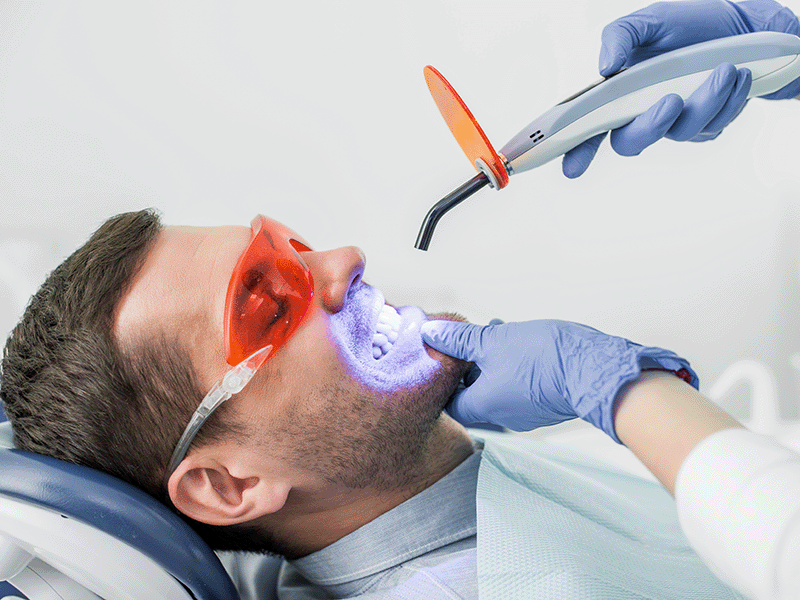
There are two main methods applied to the bleaching treatment. These are "home bleaching" and "in-office bleaching". The method to be performed may vary depending on the type and the intensity of discoloration. The dentist checks the intraoral area to find out whether the patient has internal or external coloration. He looks at the general condition of the teeth and examines the source and the spread of the discoloration. As a result of these, he decides on the most appropriate method.
• Home Bleaching: The patient wears a customized mouthguard which is prepared by taking his/her own mouth size and shape. A special dental gel is placed inside this plaque (mouthguard). The patient should wear this gel-containing plaque every day of the week and at certain times of the day. Within a week or so, the whiteness effect becomes evident. The home bleaching process takes longer than the office bleaching method which is explained below.
• In-Office Bleaching: Unlike the home bleaching method, this whitening technique is applied in the clinic. A special whitening gel is put on to the teeth and the gel has diffused on teeth with the help of dental light technology. The process takes approximately 60 minutes. Typically, whitening is completed in one session, however, it may be necessary to apply the procedure over 2 sessions, depending on the coloration.
FAQ
The results of teeth whitening are long-lasting. Compared to natural methods, teeth become whiter in a shorter time. However, paying attention to oral care has a direct effect on whiteness.
After dental bleaching, you should brush your teeth regularly. Using dental floss and natural mouthwash will also be effective. It is also important to pay attention to your diet, and not to consume teeth-staining beverages such as tea, or coffee.
Teeth whitening is not permanent, but its effects are long-lasting. Factors such as not doing oral care, not eating properly, aging, genetic factors, etc. can cause discoloration on the tooth surface over time.
SIMILAR TREATMENTS

CONTACT
You can send your questions, opinions and suggestions to us filling the information below. We will contact with you as soon as possible.
Information
Örnek Mahallesi, Ercüment Batanay Sk. No:14A, 34704 Ataşehir/İstanbul
